

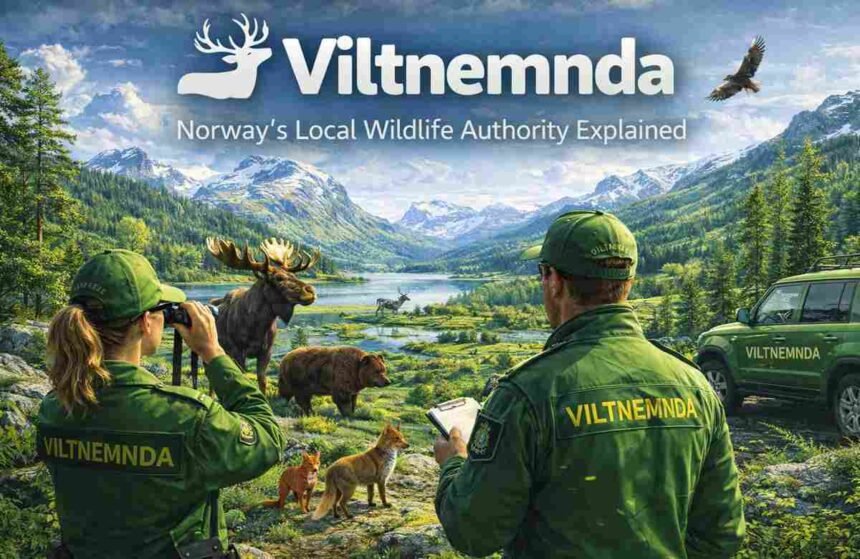
sits among Europe’s most ecologically diverse nations, and protecting that natural heritage requires more than national policy. It requires boots on the ground. Viltnemnda — the municipal wildlife committee — is exactly that. Operating inside municipalities across the country, it manages the daily intersection of biodiversity, human activity, and ecological balance. Where wildlife meets farmland, roads, and forests, this body holds operational authority. If you live alongside the Norwegian wilderness, its decisions shape your environment more directly than most people know.
- What Is Viltnemnda? (Definition and Overview)
- History of Viltnemnda and Wildlife Management in Norway
- The Legal Framework Behind Viltnemnda’s Authority
- Core Responsibilities of Viltnemnda
- Wildlife Population Regulation
- Hunting Oversight and Permit Control
- Management of Injured and Fallen Wildlife
- Human–Wildlife Conflict Resolution
- Conservation and Habitat Planning
- Structure and Membership of Viltnemnda
- Why Local Wildlife Governance Works Better Than Central Control
- Data and Technology in Viltnemnda Decision-Making
- Challenges Facing Viltnemnda
- Collaborative Efforts and Partnerships
- Success Stories and Conservation Outcomes
- Ethical Considerations in Wildlife Management
- The Future of Viltnemnda and Sustainable Wildlife Management
- Conclusion
- FAQs
- Q: What is Viltnemnda?
- Q: What does Viltnemnda mean in English?
- Q: Does Viltnemnda have legal authority?
- Q: Who appoints members of Viltnemnda?
- Q: What are the core responsibilities of Viltnemnda?
- Q: How does Viltnemnda regulate hunting?
- Q: How does Viltnemnda handle injured or dangerous wildlife?
- Q: How can someone contact Viltnemnda?
- Q: What problems does Viltnemnda solve?
- Q: Who can join or become a member of Viltnemnda?
What Is Viltnemnda? (Definition and Overview)
The word breaks down simply: vilt means wildlife, nemnd means committee. But the translation undersells what it actually does.
Viltnemnda is a legally empowered municipal body that implements wildlife policy at the local level. It is not advisory. It holds real operational authority — setting hunting quotas, approving permits, responding to emergencies, and resolving conflicts between people and animals.
Think of national wildlife law as the rulebook. Viltnemnda is the referee on the field — interpreting that rulebook in real forests, on real farms, along real roads and hunting grounds, with direct responsibility for animal welfare outcomes. This decentralization of authority is the structural principle that makes the system function. Where national law ends, local governance begins — and that transition point is precisely where Viltnemnda operates.
History of Viltnemnda and Wildlife Management in Norway
Norway’s relationship with wildlife runs deep in its cultural history. For centuries, hunting was not a sport — it was sustenance. Communities managed animal populations informally, guided by traditional lifestyles and knowledge passed across generations.
As population growth accelerated through the 20th century, informal management began to break down. Urban expansion, shifting land use, and growing ecological awareness pushed Norway toward organized conservation. New laws established formal frameworks for native species protection and sustainable wildlife use, and governance structures followed.
The shift toward localized management was deliberate. National datasets and centralized models could not capture the granular, place-specific reality of Norway’s wildly varied terrain and species distribution. Local bodies were established to translate national law into practical action, and viltnemnda became the institutional form that structure took. Modern times have only reinforced the logic: complex, fast-moving ecological challenges require decision-makers who know the land firsthand.
The Legal Framework Behind Viltnemnda’s Authority
Two laws form the backbone of Viltnemnda’s authority:
The Wildlife Act (Viltloven) governs hunting, species protection, and the sustainable use of wildlife resources. Under this act, viltnemnda functions as the municipality’s enforcement and decision-making arm. It ensures wildlife populations remain viable while permitting controlled, regulated harvesting.
The Nature Diversity Act (Naturmangfoldloven) broadens the mandate. Every decision must account for ecosystem integrity and long-term biodiversity. Population health, habitat continuity, and ecological balance are not optional considerations — they are legally binding criteria.
Together, these national legislation pillars give Viltnemnda genuine binding authority, not symbolic standing. Its decisions carry legal weight and are subject to municipal accountability.
Core Responsibilities of Viltnemnda
Wildlife Population Regulation
Viltnemnda sets local hunting frameworks based on observed data — not estimates, not pressure from interest groups. Hunter reports, field observations, and long-term population trends feed into quota decisions each season.
The goal is balance: preventing overpopulation, which strains habitat and increases road accidents, while avoiding overharvesting, which collapses future populations. Reproductive capacity, habitat pressure, and historical harvest data all factor into that calculation. Population monitoring is not a seasonal task — it runs year-round.
Hunting Oversight and Permit Control
Permits are not distributed on demand. Applicants are reviewed against current quotas, species health data, and ecological capacity. Hunters must meet defined compliance standards before approval is granted — ethical practices and legal compliance are conditions, not suggestions.
This oversight protects both hunters and ecosystems. It keeps access fair, prevents overexploitation, and maintains long-term sustainability across seasons.
Management of Injured and Fallen Wildlife
Wildlife-vehicle collisions are a daily reality on Norwegian roads — particularly involving moose and deer. When an animal is struck, viltnemnda coordinates the emergency response: humane euthanasia if needed, carcass recovery, and public safety measures at the incident site.
Speed matters in these situations. So does expertise. A poorly managed road accident can create further hazards or cause prolonged animal suffering. Police and emergency services often work alongside viltnemnda in these responses.
Human–Wildlife Conflict Resolution
Crop damage, forest degradation, livestock losses — these conflicts don’t resolve themselves. Viltnemnda investigates each case on site, assesses the scale of impact, and determines whether deterrence, controlled removal, or compensation from available funds is the appropriate response. Preventive measures are implemented afterward to reduce repeat incidents, always operating within defined legal boundaries.
This function protects farmers and landowners while maintaining wildlife credibility. Without a structured resolution process, conflicts escalate. With one, they get resolved before they become crises.
Conservation and Habitat Planning
Viltnemnda doesn’t only react — it advises. Before infrastructure is developed or land use changes are approved, the committee contributes insight on wildlife corridors, migration patterns, and breeding areas. Habitat preservation plans may lead to the designation of protected areas or active restoration programs for degraded ecosystems.
Protecting habitat before it disappears is far cheaper than rebuilding it after the fact. This forward-looking role is one of viltnemnda’s most underappreciated functions.
Structure and Membership of Viltnemnda
Municipal councils appoint members based on practical expertise, not political representation. A typical committee includes:
| Member Type | Role Contribution |
| Experienced hunters | Species behavior, population dynamics |
| Farmers/landowners | Land-use impact, conflict context |
| Municipal officials | Governance, legal compliance |
| Environmental officers | Conservation policy, habitat data |
| Biologists/foresters | Scientific grounding |
This intentional mix prevents ideological capture. No single interest dominates. Decisions reflect the full scope of what wildlife management actually involves — ecology, economics, law, and community. Appointed members carry accountability upward through municipal governance, and their decisions must withstand legal scrutiny.
Why Local Wildlife Governance Works Better Than Central Control
Norway’s geography makes centralized wildlife management impractical. Species distribution, climate conditions, and land use patterns vary sharply across regional ecosystems — from Arctic tundra to coastal woodland to dense inland forest. A quota that works in one landscape has no relevance in another.
Local intelligence fills that gap. Hunters who know specific terrain, landowners who observe annual patterns, foresters who track seasonal behavior — this firsthand knowledge cannot be replicated in any national dataset. Community involvement adds another layer: residents who live alongside wildlife bring observational depth that formal monitoring alone cannot match.
Viltnemnda translates that local knowledge into accountable, legally grounded decisions. The result is wildlife governance that reflects reality rather than statistical averages.
Data and Technology in Viltnemnda Decision-Making
Guesswork is not a management tool. Viltnemnda decisions run on continuous data intake:
- Population monitoring — hunter reports and field observations track species health and numbers across seasons
- Collision and incident data — wildlife-vehicle accident records pinpoint risk zones and inform preventive measures like fencing, seasonal signage, and alerts
- Harvest analysis — past hunting outcomes directly shape future permit decisions; if population recovery slows, restrictions tighten
Technology has expanded what’s possible. GPS tracking, camera systems, and drone surveillance now allow real-time tracking of animal movements and habitat conditions. Data-driven solutions replace assumption-based policy, and scientific evidence drives every quota and intervention decision.
This feedback loop keeps viltnemnda responsive rather than reactive.
Challenges Facing Viltnemnda
No governance system operates without friction. Viltnemnda faces several ongoing pressures:
- Habitat loss from urban expansion and agricultural development continues to fragment ecosystems and push wildlife into closer contact with human settlements
- Climate change disrupts migration patterns and breeding cycles, making population data less predictable year over year
- Funding constraints limit monitoring capacity and slow the adoption of newer data tools, forcing difficult prioritization decisions around resource allocation.
- Competing stakeholder interests — between hunters, farmers, conservationists, and developers — can complicate and delay decisions that require broad consensus.
- Public perception remains a challenge; misinformation about wildlife management methods generates resistance in communities that don’t understand the ecological rationale.
- Illegal hunting demands ongoing regulation enforcement, stretching already limited resources.n
Municipalities that invest in training, public education, and data infrastructure consistently see better outcomes and fewer escalated conflicts.
Collaborative Efforts and Partnerships
Viltnemnda does not operate in isolation. Effective wildlife management requires coordination across multiple levels.
Local communities contribute traditional ecological knowledge that enriches formal monitoring data. NGOs bring conservation expertise and funding access. Government agencies — including the Norwegian Environment Agency — provide regulatory guidance and research support. Research institutions supply scientific data that sharpens quota decisions and species assessments.
Community-led conservation initiatives have emerged from these partnerships — locally driven projects that blend traditional knowledge with modern management tools, creating solutions that neither side could develop alone.
Cross-border collaboration matters too. Migratory species don’t respect municipal lines. Coordinated frameworks across regions ensure that animals moving between jurisdictions receive consistent protection throughout their range.
Trust and open dialogue between all stakeholders aren’t soft goals — they are structural requirements for decisions that actually hold.
Success Stories and Conservation Outcomes
Results validate the model. Several outcomes stand out:
Moose population recovery — overpopulation in southern regions was addressed through careful quota adjustments and community engagement. Populations stabilized without dismantling local hunting traditions or livelihoods.
White-tailed eagle rebound — enforcing stricter guidelines around nesting sites and reducing habitat disturbance helped revive an endangered bird species that had been in sustained decline along coastal areas.
Deer management in Norwegian forests — community education paired with adaptive management strategies turned declining deer populations into stable, healthy herds. School initiatives introduced younger residents to wildlife stewardship early, building long-term conservation awareness from the ground up.
These outcomes share a common thread: data-informed decisions, wildlife-friendly practices, local ownership, and genuine stakeholder cooperation.
Ethical Considerations in Wildlife Management
Viltnemnda navigates real ethical tension. Norway’s hunting culture runs centuries deep. Conservation values — around biodiversity, animal welfare, and ecosystem integrity — have grown sharper alongside it. Both are legitimate. Neither can be dismissed.
Every significant decision passes three tests: Is it legal? Is it ecologically justified? Is it ethically defensible?
That friction between tradition, science, and public emotion isn’t a weakness in the system. It is the mechanism that keeps decisions honest, grounded, and resistant to capture by any single interest group.
The Future of Viltnemnda and Sustainable Wildlife Management
The trajectory points toward deeper integration of technology and broader community engagement. GPS tracking, drone surveillance, and data-driven platforms are becoming standard tools rather than experimental ones.
Climate change will demand flexible frameworks — management strategies that adapt as ecosystems shift faster than historical models predict. Research institutions will play a growing role, supplying real-time scientific evidence to replace outdated assumptions.
Awareness campaigns and outreach programs targeting schools and younger residents are expanding. The goal is a generation that understands biodiversity not as an abstract concern, but as something directly tied to the landscapes they live in.
Policymakers, NGOs, and government agencies will need to work closer with municipal bodies like viltnemnda — not above them. The local level is where conservation either works or fails.
Conclusion
Viltnemnda is a quiet governance that delivers measurable outcomes. While national laws define principles, this committee converts them into daily, enforceable action — protecting ecosystems, managing hunting sustainably, and resolving human-wildlife conflicts before they spiral.
Its strength lies in local intelligence backed by legal authority. Field experience, population data, and community accountability shape decisions that no distant bureaucracy could replicate. Collective action — hunters, farmers, scientists, officials, and residents working under one accountable structure — is what turns community aspirations for a balanced natural environment into reality.
In a world where ecological responsibility is increasingly urgent, viltnemnda offers a working model: empowered local institutions that understand their land, species, and communities well enough to actually protect them.
FAQs
Q: What is Viltnemnda?
Viltnemnda is Norway’s municipal wildlife committee, responsible for managing wildlife populations, hunting regulation, and human-wildlife conflicts at the local level.
Q: What does Viltnemnda mean in English?
It translates directly as “the wildlife committee” — vilt means wildlife and nemnd means committee or board in Norwegian.
Q: Does Viltnemnda have legal authority?
Yes. It operates under the Wildlife Act (Viltloven) and the Nature Diversity Act (Naturmangfoldloven), giving it binding decision-making power at the municipal level.
Q: Who appoints members of Viltnemnda?
Municipal councils appoint members. Appointments typically include hunters, landowners, environmental officers, and occasionally biologists or forestry specialists.
Q: What are the core responsibilities of Viltnemnda?
Setting hunting quotas, issuing permits, monitoring wildlife populations, resolving human-wildlife conflicts, and advising on habitat preservation and land use planning.
Q: How does Viltnemnda regulate hunting?
Through data-driven quota systems and permit controls that align hunter access with current population trends and ecological capacity, ensuring legal compliance and long-term sustainability.
Q: How does Viltnemnda handle injured or dangerous wildlife?
It coordinates humane responses, including euthanasia and carcass removal, often working alongside police and emergency services to ensure public safety.
Q: How can someone contact Viltnemnda?
Through their local municipality office. Each Norwegian municipality with an active committee lists contact details through municipal administration channels.
Q: What problems does Viltnemnda solve?
Human-wildlife conflicts, population imbalances, crop and livestock damage, illegal hunting, and habitat loss through proactive management and structured resolution processes.
Q: Who can join or become a member of Viltnemnda?
Membership is by municipal council appointment. Hunters, landowners, biologists, environmental officers, and forestry specialists are all eligible based on relevant expertise.