


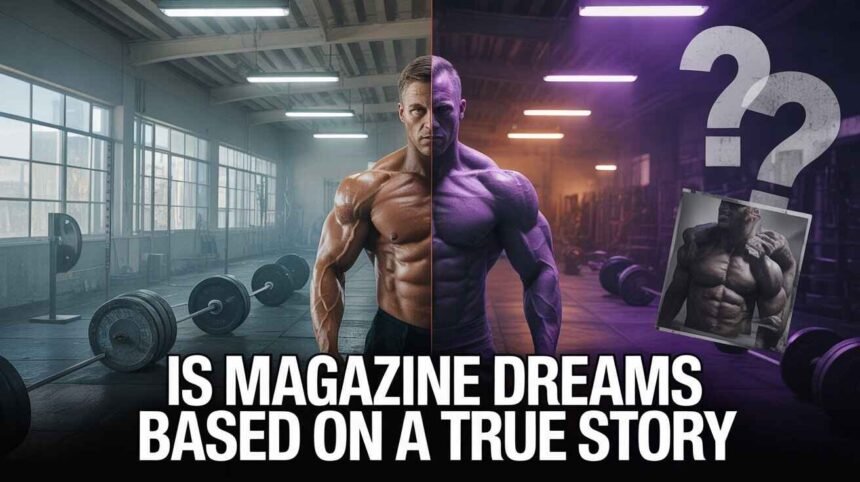
Is Magazine Dreams based on a true story? This is one of the most common questions viewers ask after watching the film—and for good reason. Magazine Dreams feels intensely real. Its portrayal of obsession, isolation, and bodybuilding culture is so grounded that many people assume it must be drawn from real events.
- Is Magazine Dreams Fiction or Reality?
- Why Magazine Dreams Feels Like a True Story
- Bodybuilding Culture as Real-World Inspiration
- Is Killian Maddox a Real Person?
- Inspired by Reality, Not Real Events
- Why the Film Avoids “Based on a True Story” Labels
- Psychological Realism vs Historical Truth
- Common Misunderstandings About Magazine Dreams
- “It must be real because it’s so intense.”
- “The character feels too specific to be fictional.”
- “Bodybuilders really live like this.”
- Why This Question Matters
- Final Thoughts
- Frequently Asked Questions
The clear answer is no, Magazine Dreams is not based on a true story. However, the film is deeply rooted in realistic experiences, which is why the confusion exists. Let’s break down what’s fictional, what’s inspired by reality, and why the film feels so authentic.
Is Magazine Dreams Fiction or Reality?
To be precise, Magazine Dreams is a fictional story. The main character, Killian Maddox, is not a real person, and the events of the film did not happen to a specific individual.
That said, asking “Is Magazine Dreams based on a true story?” isn’t wrong. The film draws heavily from real-world behaviors, environments, and psychological patterns commonly found in competitive bodybuilding and extreme self-discipline cultures.
This blend of fiction and realism is intentional.
Why Magazine Dreams Feels Like a True Story
Even though Magazine Dreams is not based on a true story, it feels authentic because of how closely it mirrors real experiences.
Several elements contribute to this realism:
- Accurate depiction of bodybuilding routines
- Emotional isolation common in obsessive lifestyles
- Realistic social rejection and misunderstanding
- Subtle, non-dramatic storytelling
As someone familiar with character-driven cinema, this level of restraint is usually what makes audiences question whether a story is real.
Bodybuilding Culture as Real-World Inspiration
One reason people keep asking, “Is Magazine Dreams based on a true story?” is the film’s portrayal of bodybuilding culture.
The movie reflects realities such as:
- Extreme discipline and routine
- Identity built entirely around physical appearance
- Emotional neglect outside training goals
- Validation-seeking through recognition
These are not exaggerated inventions. They are observable traits within certain competitive fitness environments, even though the story itself is fictional.
Is Killian Maddox a Real Person?
No. Killian Maddox is a fictional character.
However, Killian represents a type of individual rather than a specific real person. He is a composite character—built from shared traits, behaviors, and struggles seen across many real people.
This is why the question “Is Magazine Dreams based on a true story?” keeps resurfacing. The character feels psychologically familiar, even if he never existed.
Inspired by Reality, Not Real Events
It’s more accurate to say that Magazine Dreams is inspired by reality, not based on a true story.
Inspired by reality means:
- No direct adaptation of real events
- No real-life individual as the subject
- Emotional and psychological realism
This approach allows filmmakers to explore difficult themes without being constrained by factual accuracy.
Why the Film Avoids “Based on a True Story” Labels
Many films lean on “based on a true story” labels for marketing. Magazine Dreams intentionally avoids this.
Why? Because labeling it as a true story would:
- Limit interpretation
- Shift focus from themes to facts
- Reduce the universality of the message
By staying fictional, the film invites viewers to reflect rather than compare details to real cases.
Psychological Realism vs Historical Truth
When people ask, “Is Magazine Dreams based on a true story?”, they’re often responding to psychological realism, not factual accuracy.
The film excels at:
- Showing emotional repression
- Depicting obsession without glamorizing it
- Presenting mental strain subtly
These elements feel “true” even when the story itself is not.
Common Misunderstandings About Magazine Dreams
“It must be real because it’s so intense.”
Intensity does not equal truth. Strong character writing often creates this illusion.
“The character feels too specific to be fictional.”
Specificity is what makes fictional characters believable.
“Bodybuilders really live like this.”
Some do. That doesn’t mean this exact story happened.
These misunderstandings fuel the ongoing debate about whether Magazine Dreams is based on a true story.
Why This Question Matters
The reason “is Magazine Dreams based on a true story?” matters so much is because it shows the film succeeded in its goal. It made viewers uncomfortable, reflective, and curious.
From experience analyzing character-driven films, this level of realism usually signals strong writing, grounded direction, and a refusal to oversimplify complex human behavior.
Final Thoughts
To be absolutely clear: Magazine Dreams is not based on a true story. There is no real-life Killian Maddox, and the film does not retell actual events.
What it does offer is something just as powerful—a fictional narrative built on emotional truth, psychological realism, and real-world inspiration.
That balance is why the question keeps coming up—and why Magazine Dreams leaves such a lasting impression.
Frequently Asked Questions
Is Magazine Dreams based on a true story?
No. Magazine Dreams is not based on a true story, but it is inspired by real-life behaviors and environments.
Is Killian Maddox a real bodybuilder?
No. He is a fictional character created to explore psychological themes.
Are the bodybuilding scenes realistic?
Yes. The routines, discipline, and physical demands are portrayed realistically.
Why does the film feel so real?
Because it prioritizes emotional honesty over dramatic exaggeration.