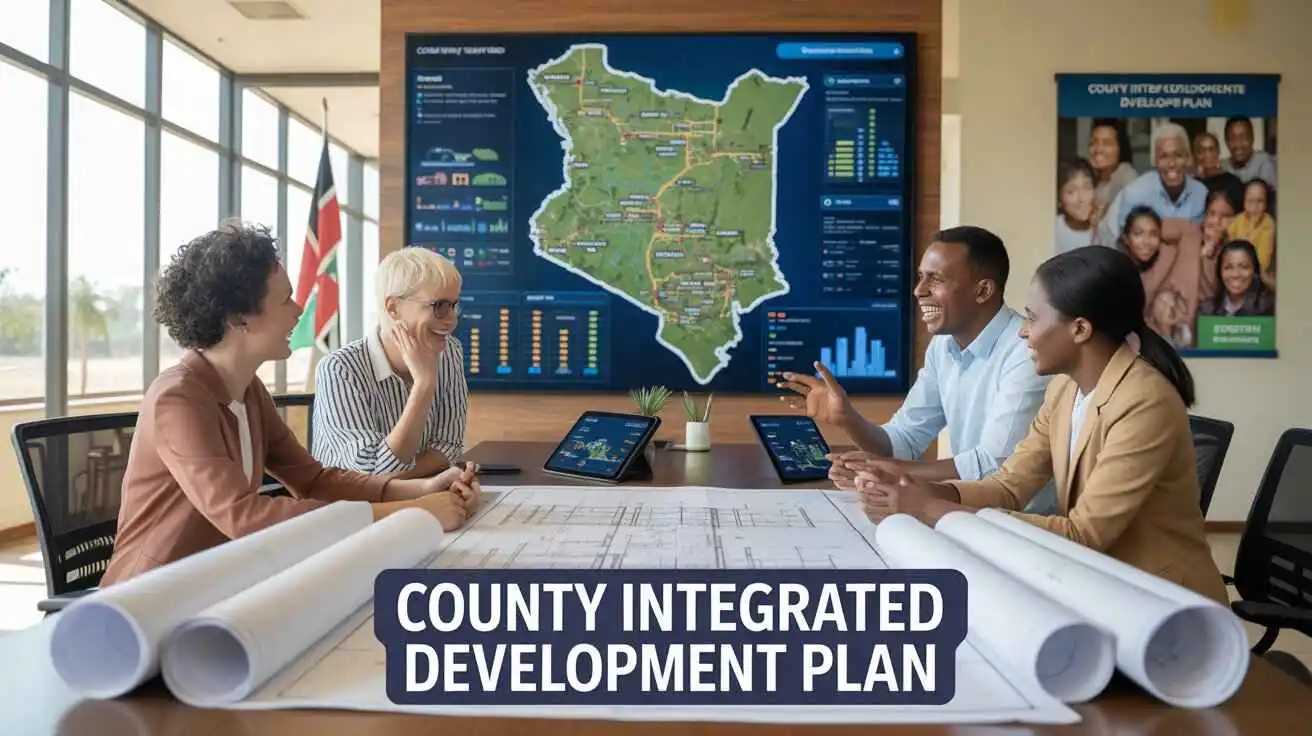

Every county in Kenya operates with a strategic blueprint that determines which roads get built, how many health centers open, and where schools are constructed. This blueprint is the County Integrated Development Plan (CIDP), a legally required document that shapes development priorities for five years.
- Understanding the County Integrated Development Plan Framework
- Core Objectives and Purpose
- The CIDP Preparation Process Explained
- Phase 1 – Preparation and Data Collection
- Phase 2 – Public Participation and Prioritization
- Phase 3 – Drafting, Approval, and Publication
- Essential Components Every County Integrated Development Plan Must Have
- Who Is Involved in CIDP Development?
- How CIDP Guides County Budgeting and Development
- Challenges Counties Face When Implementing CIDPs
- How Citizens Can Engage with Their County’s CIDP
- CIDP Success Indicators and Performance Metrics
- Conclusion
- Frequently Asked Questions
- How long does a County Integrated Development Plan cover?
- Is public participation in CIDP legally required?
- What happens if a county doesn’t prepare a CIDP?
- Can a CIDP be revised before the five-year period ends?
- How is CIDP different from the County Budget?
- Where can I access my county’s CIDP document?
- Who approves the final County Integrated Development Plan?
- Do all 47 counties in Kenya have CIDPs?
If you’ve ever wondered why some projects get funded while others don’t, or how counties decide what to build next, the answer lies in the CIDP. Understanding what a County Integrated Development Plan is helps citizens hold their governments accountable, shows investors where opportunities exist, and guides county staff in aligning their work with community needs.
Understanding the County Integrated Development Plan Framework
A County Integrated Development Plan is a comprehensive strategic document outlining a county’s development vision, priorities, and implementation strategy for five years.
The County Government Act, 2012, requires every county to prepare and publish a CIDP within one year of a new governor taking office.
The CIDP works differently from other planning documents. The Annual Development Plan (ADP) focuses on one-year operational details. The county budget allocates actual funds. But the CIDP provides the long-term strategic direction that guides both.
Think of it this way: the CIDP is your master plan, the ADP is your yearly work plan, and the budget is your wallet.
Counties that skip their County Integrated Development Plan risk losing access to the County Equitable Share and conditional grants from the national government.
The framework integrates sectoral strategies—agriculture, health, infrastructure, education, water—into one coherent document. This prevents departments from working in silos.
| Planning Document | Time Horizon | Primary Focus | Legal Basis |
| CIDP | 5 years | Strategic vision and priorities | County Government Act, 2012 |
| Annual Development Plan | 1 year | Operational implementation | Public Finance Management Act |
| County Budget | 1 year | Resource allocation and spending | Public Finance Management Act |
Core Objectives and Purpose
Every County Integrated Development Plan serves specific objectives that determine how counties develop.
First, CIDPs translate national goals like Vision 2030 and Sustainable Development Goals into county-specific programs. Universal health coverage becomes tangible through targets for health facilities and staffed personnel.
Second, the plan aligns the county’s vision with available resources. Counties can’t fund everything communities want, so the CIDP prioritizes interventions based on impact and feasibility.
Third, CIDPs create participation frameworks, ensuring marginalized communities, women, youth, and persons with disabilities contribute to priorities.
Fourth, the document establishes accountability mechanisms. When counties commit to specific projects with timelines and budgets, citizens can track progress and demand answers for delays.
Fifth, CIDPs guide external stakeholders. Development partners, investors, and NGOs consult county plans to align their work with government priorities.
Finally, the plan addresses development gaps identified through baseline data on infrastructure coverage, service delivery, and economic performance.
The CIDP Preparation Process Explained
Creating a comprehensive County Integrated Development Plan involves structured phases that balance technical expertise with public input.
Phase 1 – Preparation and Data Collection
County planning departments lead preparation by mapping stakeholders from ward administrators to sector experts. Sensitization workshops explain the process and encourage participation.
Teams conduct baseline surveys examining population demographics, economic performance, infrastructure coverage, and environmental conditions.
Sector performance reviews evaluate what worked previously and what failed. Resource inventory catalogs county assets—land, equipment, personnel, revenue sources, and potential partnerships.
Phase 2 – Public Participation and Prioritization
Ward-level forums bring citizens together to identify needs and rank priorities. Facilitators use participatory techniques, focus groups, and questionnaires to capture input.
Different demographic groups hold separate consultations, ensuring inclusive representation.
Communities identify needs ranging from classroom construction to market infrastructure. Priority ranking exercises force hard choices when resources can’t fund everything.
Criteria include impact on livelihoods, number of beneficiaries, and available funding sources.
Phase 3 – Drafting, Approval, and Publication
Technical teams consolidate public input and sector data into a draft document. The County Executive Committee reviews it, providing policy direction.
The draft moves to the County Assembly for debate, amendments, and approval. Public hearings allow citizen comments before legislators vote.
Once approved, counties publish the County Integrated Development Plan through websites, libraries, and public offices.
Essential Components Every County Integrated Development Plan Must Have
Every County Integrated Development Plan follows a standardized structure ensuring comprehensive coverage. County profile and situational analysis provide baseline data on population, geography, economic activities, and infrastructure status.
Development vision and strategic goals articulate where the county targets in five years. These cascade from broad vision into measurable objectives across sectors. Sector strategies detail how each department contributes to development.
Flagship projects highlight major initiatives defining the development agenda. Implementation matrix breaks down responsibilities, timelines, and budgets, linking projects to funding sources.
The monitoring and evaluation framework establishes performance indicators, data collection methods, and accountability mechanisms. Resource mobilization strategy outlines funding beyond equitable share allocations through grants, partnerships, and own-source revenue.
Risk management plans identify obstacles like revenue shortfalls and political interference with mitigation measures.
Who Is Involved in CIDP Development?
Multiple stakeholders contribute to creating an effective County Integrated Development Plan. County planning departments provide technical leadership, coordinating data collection, facilitating consultations, and drafting documents.
County Executive Committees give policy direction and review drafts before assembly submission. County Assemblies exercise oversight, scrutinizing plans, holding hearings, proposing amendments, and approving final documents.
Citizens articulate grassroots needs through ward forums and written submissions. Their participation ensures plans reflect actual priorities. Civil society organizations advocate for marginalized groups and provide technical input.
Private sector representatives share investment perspectives and advise on economic strategies. National government agencies provide technical support and ensure alignment with national frameworks. Development partners offer expertise and potential funding opportunities.
How CIDP Guides County Budgeting and Development
The County Integrated Development Plan directly influences annual budgeting and resource allocation. Each year, counties prepare Annual Development Plans, selecting specific CIDP projects for implementation.
Budget ceilings from the National Treasury determine development versus recurrent spending. Most counties allocate 30-40% to development. County treasuries use CIDP implementation matrices to prepare budget estimates. Projects listed with clear cost estimates get prioritized.
Multi-year forecasting spreads large infrastructure projects across financial years. A hospital might be planned over three years: site preparation year one, construction year two, equipment year three.
Quarterly reports track how budgets translate into project delivery. Assemblies review reports against CIDP targets, questioning deviations. Mid-term reviews allow adjustments based on performance data or new opportunities.
Challenges Counties Face When Implementing CIDPs
Despite strong frameworks, counties encounter obstacles in executing their County Integrated Development Plan. Limited revenue and over-ambitious plans create implementation gaps with incomplete projects. Political interference diverts resources from planned priorities to politically expedient interventions.
Weak monitoring systems prevent progress tracking or early problem identification. Poor public participation results in plans missing actual community priorities. Capacity gaps limit the technical quality of analysis and strategy formulation.
Coordination issues create departmental silos where sectors work independently.
How Citizens Can Engage with Their County’s CIDP
Citizens have multiple entry points to influence county development plans. Participate in ward forums during preparation when counties advertise public sessions through radio, posters, and SMS. Access published documents through county websites, planning offices, or libraries to understand commitments.
Submit written memoranda during public comment periods. County Assembly hearings allow formal citizen input before approval. Track budget implementation, comparing annual plans against CIDP commitments.
Demand accountability reports from county assembly members explaining project progress in your area. Use digital participation portals where available. Work through community-based organizations that amplify citizen voices.
CIDP Success Indicators and Performance Metrics
Counties evaluate County Integrated Development Plan performance through specific indicators. Project completion rates measure the percentage of planned projects that finish within timelines. Budget absorption capacity shows how effectively counties spend development funds.
Development outcomes track tangible results: roads completed, health facilities built, student-teacher ratios improved. Citizen satisfaction surveys gauge whether communities feel services have improved. Alignment with national KPIs ensures county performance contributes to broader goals.
Economic growth indicators like increased revenue, business registrations, and employment reflect whether plans stimulate local economies. Service delivery improvements measure access, quality, and equity across sub-counties.
Conclusion
The County Integrated Development Plan serves as the foundation for accountable, participatory county governance in Kenya. When properly prepared with genuine public participation, CIDPs translate community aspirations into funded projects that improve lives.
Effective CIDPs drive equitable development, ensuring marginalized areas receive attention and vulnerable groups benefit from resources. Citizens who understand their county’s CIDP can track implementation and demand accountability. Engaging with your county’s planning process is how devolution delivers on bringing government closer to people.
Frequently Asked Questions
How long does a County Integrated Development Plan cover?
A County Integrated Development Plan covers five years aligned with the governor’s term. Counties conduct mid-term reviews and can adjust based on performance.
Is public participation in CIDP legally required?
Yes, the County Government Act, 2012, mandates public participation. Counties must hold ward-level forums and stakeholder consultations before finalizing plans.
What happens if a county doesn’t prepare a CIDP?
Counties without approved CIDPs risk losing national government funding, including County Equitable Share and conditional grants.
Can a CIDP be revised before the five-year period ends?
Yes, counties conduct mid-term reviews after 2-3 years and can revise CIDPs based on implementation progress or new opportunities.
How is CIDP different from the County Budget?
The CIDP is a five-year strategic plan outlining priorities. The county budget is an annual financial document allocating funds to projects selected from the CIDP.
Where can I access my county’s CIDP document?
Published CIDPs are available on county websites, planning offices, public libraries, and through the Council of Governors portal.
Who approves the final County Integrated Development Plan?
The County Assembly approves the final CIDP after public hearings and committee reviews. The County Executive prepares the draft.
Do all 47 counties in Kenya have CIDPs?
Yes, all 47 counties are legally required to prepare CIDPs. Most counties are implementing third-generation CIDPs covering 2023-2027.